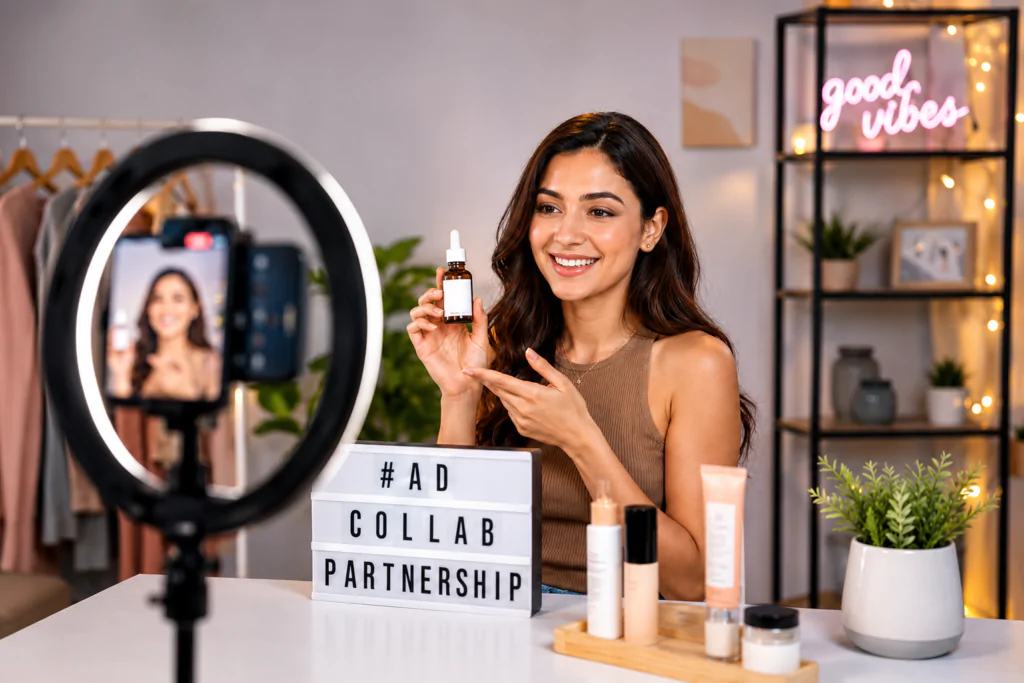

Product Gifting vs Paid Influencer Collaborations: Which Works Better for Brands?

Product gifting vs paid collaboration is a decision every brand working with creators eventually has to make. Do you send free product and hope someone posts about it, or pay a creator upfront and lock in exactly what you’re getting? That’s the product gifting vs paid collaboration debate, and honestly, we get asked about it in almost every strategy call.
There isn’t a clean winner here. Both routes work, just not for the same brand, the same budget, or the same moment in a campaign. Below, we’ll get into how influencer gifting plays out in the real world versus paid influencer campaigns, where product seeding earns its keep on its own, and how to actually think through creator compensation without just guessing.
Product Gifting vs Paid Collaboration: Which One Wins?
When comparing product gifting vs paid collaboration, the right choice depends on your campaign goal, budget, timeline, creator relationships, and how much control you need over the final content.
Nobody tells you this when you’re starting out, but gifting feels like the “safe” choice and paid deals feel like the “grown-up” choice. Neither of those assumptions really holds up once you’ve run a few campaigns.
We’ve watched brands mail out hundreds of packages expecting a wave of organic love, and get back maybe a dozen half-hearted Stories and a lot of nothing. We’ve also watched brands hand their entire quarter’s budget to three paid creators, only for the content to come out stiff enough that followers could smell the ad from a mile away. The real answer sits somewhere in the middle, and it depends almost entirely on what the campaign is actually supposed to accomplish, who the audience is, and honestly, how patient the brand is willing to be while the results come in.
What Product Gifting Actually Looks Like
Product gifting, or product seeding if you want the industry term, is pretty much what it sounds like. You send a creator your product for free, usually without a contract forcing them to post anything at all. The bet is simple: if the product’s genuinely good, they’ll want to talk about it.
Why Gifted Collaborations Are Often the First Move
There’s a reason so many brands start here. It’s cheap, it’s low-pressure, and when it works, the content tends to feel real in a way paid posts sometimes struggle to. A creator gushing over something because they actually like it just hits differently on camera than a creator reading off brand talking points.
It’s also a decent way to test a lot of creators at once without blowing your whole budget. Send products to fifty or a hundred people instead of paying three, and you get a much clearer picture of who’s genuinely into your brand before you commit real money to anyone.
Working with an experienced influencer marketing team can also help brands identify the right creators, manage outreach, and build campaigns around the right audience.
Where It Falls Apart
The catch, and it’s a big one, is that gifting comes with no guarantees whatsoever. A creator might love your product and never mention it once. They might post one Story that vanishes in a day. They might not even open the box. Since there’s nothing binding them to post, brands have basically zero leverage to ask for specific content, a timeline, or the right to reuse that content later.
This is usually where the frustration kicks in. Brands ship out a mountain of product, eat the shipping and packaging costs, and end up with results that are all over the place. Product seeding is a great discovery tool. It’s a decent way to build early relationships with creators. It’s not something you should build a whole launch around.
What Paid Influencer Campaigns Actually Get You
Paid campaigns work the opposite way. Instead of hoping something happens, the brand pays for specific deliverables – a set number of posts, a fixed timeline, usage rights, sometimes creative direction on what the messaging should even say.
Why Brands Eventually Move Toward Paid Deals
The big win with paid partnerships is that you actually know what you’re getting. Once creator compensation is on the table, you can negotiate the details upfront: how many pieces of content, which platforms, what needs to be mentioned, how long it stays live. That matters a lot when a campaign is tied to a launch date, because “maybe they’ll post something” doesn’t cut it when there’s a product hitting shelves next Tuesday.
Paid deals are also usually the only way to get bigger creators involved. Most mid-tier and macro creators aren’t posting for free product alone. Their time has a price, and if you want them on your calendar, you’re paying for it.
When campaigns require professionally produced creator assets, video production can also help brands create high-quality content that can be used across multiple platforms.
The Catch With Paid Content
Here’s the flip side though – paid content can end up looking exactly like what it is. An ad. Audiences have gotten pretty good at spotting sponsored posts, and if the script feels too polished or too far from how the creator normally sounds, engagement drops fast. Paid campaigns also cost a lot more upfront, and if you don’t walk in with a clear goal, it gets hard to justify the spend once the numbers come in.
A strong content marketing strategy can also help brands get more value from creator content by repurposing it across different marketing channels.
Product Gifting vs Paid Collaboration:Which One Wins?
Wrong question, honestly. The better one is: what’s this specific campaign supposed to do, and which approach actually gets you there?
When Gifting Is the Smarter Call
Gifted collaborations tend to work best when the goal is broad awareness, when you’re trying to figure out which creators genuinely vibe with your product, or when you’re leaning on a big group of nano and micro creators where combined reach matters more than any one post. It’s also a solid move if you’ve got a newer product and need real feedback before you commit to a bigger, paid push.
When considering product gifting vs paid collaboration, gifting can be a practical choice when awareness, creator discovery, and authentic product recommendations are the main goals.
When Paid Is the Smarter Call
Paid influencer campaigns make a lot more sense when you need guaranteed content tied to a specific date — a launch, a sale, a seasonal moment — or when you’re working with creators whose audience size comes with a price tag attached, which, let’s be honest, most established creators do. If success is being measured against hard numbers like reach or conversions, paying for it is almost always the safer bet.
For major launches and high-visibility campaigns, brands may also consider celebrity endorsement partnerships when broader awareness is the priority.
The product gifting vs paid collaboration decision becomes easier when the campaign requires guaranteed deliverables, fixed timelines, and measurable results.
Why the Smartest Campaigns Usually Do Both
In practice, the brands getting the best results rarely go all-in on one side. What tends to work is layering gifted product across a wide net of micro and nano creators to build organic buzz, while putting real budget behind a smaller group of proven creators who can guarantee the numbers the campaign actually needs. Gifting lays the groundwork. Paid partnerships build the guaranteed outcomes on top.
| Factor | Product Gifting | Paid Collaboration |
|---|---|---|
| Upfront Cost | Lower | Higher |
| Guaranteed Content | Usually No | Yes |
| Creator Control | High | Negotiated |
| Best For | Awareness & Testing | Launches & Conversions |
| Content Timeline | Flexible | Defined |
| Usage Rights | Usually Limited | Can Be Negotiated |
| Best Creator Types | Nano & Micro | Micro, Mid-Tier & Macro |
This product gifting vs paid collaboration comparison shows why brands should choose their approach based on campaign objectives rather than simply focusing on cost.
A Quick Gut-Check Before You Decide
Before making a product gifting vs paid collaboration decision, a few questions are worth considering before you lock in a strategy for your next campaign:
- What’s the actual goal here? Awareness and buzz lean toward gifting. Guaranteed reach and conversions lean toward paid.
- What’s the timeline? If content has to go live on a specific date, paid is really the only way to guarantee it happens.
- What tier are these creators? Nano and micro creators are often happy with product alone. Mid-tier and macro creators usually expect a paycheck.
- What’s the budget actually look like? Gifting stretches further across more people. Paid concentrates spend on fewer, higher-impact partnerships.
- How much control do you need over the message? Paid deals come with contracts that can specify tone and timing. Gifted content is entirely up to the creator, for better or worse.
Frequently Asked Questions
Is product gifting better than paid influencer campaigns?
What is the difference between product gifting and paid collaboration?
Does influencer gifting guarantee a post?
How much should brands pay influencers?
When should a brand choose a paid influencer collaboration?
How We Approach This at 6th Street
At 6th Street, we don’t treat product gifting vs paid collaboration as an either-or decision. We build campaigns using both approaches based on what the brand actually needs – the right creators for gifted seeding to build reach, and the right paid partnerships to guarantee outcomes tied to a real deadline..
Not sure which way to go for your next campaign? Let’s figure it out together.
Call us: +91 91366 69815 Email: info@6thstreetartist.com

Manpreet Singh Chadha was a visionary entrepreneur and co-founder of 6th Street Artist, a Mumbai-based influencer marketing agency. With a passion for empowering creators and brands, he played a pivotal role in shaping the agency’s mission to revolutionize influencer marketing in India. His legacy continues to inspire the industry.