
Influencer Pricing in India 2026: Complete Brand Guide
Smart brands do not ask how little they can spend. They ask how far their budget can go.
Influencer pricing is one of the biggest questions brands face when planning campaigns in 2026. How much should you pay a nano, micro, macro or celebrity influencer? What should your total influencer marketing budget look like, and how do you know whether the investment is likely to deliver a return?
At 6th Street Artist, we have helped brands across categories plan and execute influencer campaigns at different budget levels. This guide breaks down influencer pricing in India in 2026, explains what affects influencer rates, and shows brands how to structure their budgets based on campaign goals, creator tiers and expected ROI.
Why Influencer Pricing Feels So Confusing
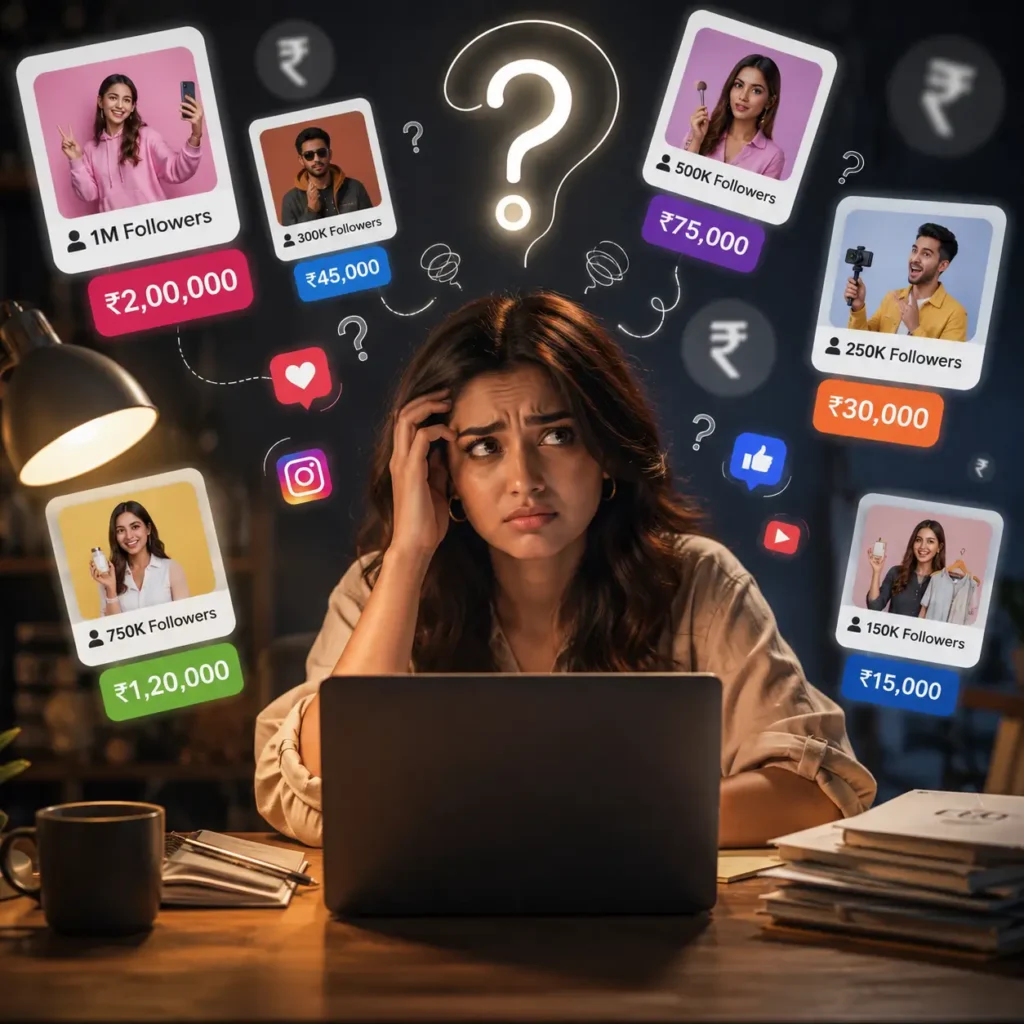
There Is No Standard Rate Card
This is the first thing brands need to understand. Influencer pricing is not like buying a Google ad, where you know the cost per click before you start. Every creator negotiates individually based on their follower count, their engagement rate, the content format you need, whether you want usage rights, and how busy they are at the time you are reaching out.
Two creators with exactly the same follower count can charge completely different rates depending on their niche, the quality of their audience, and how in demand they are. A parenting creator with 80,000 followers who gets constant brand inquiries will charge more than a travel creator with 80,000 followers who is still building their brand partnerships portfolio. That gap can be significant.
Getting It Wrong Is Expensive Either Way
Underbudgeting pushes you toward creators who are not the right fit or forces you to cut corners on content quality. Overbudgeting on the wrong creators means paying for reach that never converts. Both feel like wasted money because both are.
The only way to avoid this is to understand what you are paying for at each tier before you start allocating.
Influencer Pricing in India in 2026
Nano Influencers pricing (1K to 10K Followers)
The most affordable tier and one of the most underestimated. A single Reel or post from a nano creator typically costs anywhere from a product exchange to around Rs 5,000 to Rs 15,000, depending on the niche and how much production effort the content requires.
For brands testing a new audience or running a hyperlocal campaign, nano influencers let you work with multiple creators simultaneously without breaking the budget. The trust their communities have in them is genuine, and that quality of attention is hard to find at any other price point.
Nano influencers are particularly useful for local businesses, niche brands and product-testing campaigns. Their smaller but highly connected communities can generate strong engagement and authentic recommendations. For brands focused on trust and community-level visibility, nano influencer pricing can be more cost-effective than larger creator partnerships.
Micro Influencers pricing (10K to 100K Followers)
This is where most well-thought-out campaigns end up. Micro influencer pricing in India in 2026 sits roughly between Rs 10,000 and Rs 75,000 per post or Reel, depending on follower count, engagement rate, and what the content involves. Creators at the higher end of this range with strong niche audiences and high engagement can command more.
For the combination of trust, engagement quality, and audience specificity you get here, micro-influencers deliver the strongest influencer marketing ROI of any tier when the creator-brand match is right.
For brands looking to build long-term relationships with creators, professional Talent Management Services can also help streamline creator selection and campaign coordination.
Micro influencers are a strong choice for brands that want to balance reach, engagement and credibility. Their audiences are usually built around specific interests or niches, making it easier to reach relevant customers without spending heavily on mass-reach campaigns. This makes micro influencer pricing particularly attractive for brands focused on targeted awareness, engagement and conversions.
Macro Influencers pricing (100K to 1M Followers)
Creator fees at this level range from Rs 75,000 to Rs 5,00,000 per deliverable, depending on the creator, the format, and whether usage rights are part of the deal. Brands at this tier are paying primarily for scale and the visibility that comes with a creator who has built a genuinely large following.
Celebrity Influencers pricing (1M+ Followers)
Pricing starts at Rs 5,00,000 and goes into crores for Bollywood names, top cricketers, and national musicians. The association effect and mass reach are what justify this investment, and the campaign objective needs to genuinely require that kind of scale to make the numbers work.
What Factors Affect Influencer Pricing?
-
- Follower count
-
- Engagement rate
-
- Audience quality
-
- Creator niche
-
- Social media platform
-
- Content format
-
- Number of deliverables
-
- Campaign duration
-
- Usage rights
-
- Exclusivity
-
- Production requirements
-
- Creator demand
Influencer pricing is not determined by follower count alone. Engagement rate, audience quality, content format, niche, campaign duration and usage rights can all influence the final influencer fee. This is why two creators with similar follower counts can have very different rates.
How to Actually Set Your Influencer Marketing Budget
Start With the Goal Not the Number
The most common mistake in influencer budget planning is picking a number first and then trying to build a campaign around it. What are you actually trying to achieve? Brand awareness at scale needs a different budget structure from a conversion-focused campaign targeting a specific niche.
If you need broad reach quickly, a larger budget concentrated in macro or celebrity partnerships makes sense. If you need trust-driven conversions in a specific category, spreading budget across multiple micro creators with strong niche alignment will almost always outperform a single big-name placement.
What the Benchmarks Say
Most brands allocate between 10% and 25% of their total digital marketing budget to influencer marketing. New to the channel, start at 10% and scale based on what the data shows. Brands that have made influencer marketing a primary channel often go significantly higher.
According to HubSpot’s marketing budget research, brands that treat influencer marketing as a core investment rather than an optional add-on consistently report stronger brand recall and lower customer acquisition costs over time.
The Costs Brands Forget to Budget For
Creator fees are only part of the picture. A realistic influencer marketing budget also includes usage rights if you plan to run creator content as paid ads, which is one of the smartest ways to extend the value of influencer investment. It includes gifting and product seeding costs for product-led campaigns. And if you are working with an agency, their fees for creator sourcing, brief development, and campaign management need to be in the plan from the start.
Discovering these costs mid-campaign is one of the most reliable ways to feel like you went over budget even when you did not.
What Kind of ROI Should You Actually Expect
By Tier
Nano and micro campaigns consistently deliver the highest engagement per rupee spent. The audience trust is real and the cost per meaningful interaction is significantly lower than what you get at macro or celebrity level.
Macro campaigns are efficient at reach but the ROI shows up more in brand awareness lift and share of voice than in direct conversions. Celebrity campaigns are a long game. The ROI is brand perception, market positioning, and the credibility transfer that happens when a well known face backs your brand. Brands considering large-scale celebrity partnerships can also explore our Celebrity Endorsement Services.
The Metrics That Tell You It Worked
Influencer marketing ROI is not just sales. It shows up in branded search volume going up after a campaign, referral traffic that converts better than cold paid traffic, follower growth on your own accounts, and creator content that keeps driving awareness weeks after the campaign ended.
For a full breakdown of how to measure this properly, this guide on measuring influencer marketing success goes into the detail most brands need but rarely get.
Budget Mistakes That Are Easy to Make
Putting Everything Into One Creator
One partnership is high risk. If the content does not land, the whole campaign suffers. Spreading budget across multiple creators at different tiers gives you coverage, real comparison data, and protection against a single underperforming collaboration taking everything down with it.
Skipping Usage Rights
Creator content that performs well organically almost always outperforms brand-produced creative when used as paid ads. But going back to secure usage rights after a campaign has ended costs more than building it into the deal from the start. Sort this before the brief goes out.
Same Budget Structure for Every Campaign
A product launch, a brand awareness push, and a seasonal promotion are three completely different campaigns. Treating them with the same budget template produces results that do not match the objective and makes it impossible to understand what went wrong or right.
How 6th Street Artist Approaches This
At 6th Street Artist, budget planning is not the last part of the conversation. Our Influencer Marketing Services help brands choose the right creators, plan campaigns and structure their influencer marketing budget around measurable goals.
We work with brands across FMCG, fashion, real estate, fintech, healthcare, and more. Whether the budget is Rs 5 lakh or Rs 50 lakh, the thinking behind how it is allocated matters more than the number.
To understand how influencer marketing fits into a broader brand strategy, this piece on why every industry is betting on influencer marketing is worth reading before you finalise your plan.
If you are building your influencer marketing budget for 2026 and want to make sure it is structured to actually deliver, come talk to us first.
Let’s Talk
Call us: +91 91366 69815 Email: info@6thstreetartist.com
Follow us for more: Instagram | LinkedIn | YouTube

Manpreet Singh Chadha was a visionary entrepreneur and co-founder of 6th Street Artist, a Mumbai-based influencer marketing agency. With a passion for empowering creators and brands, he played a pivotal role in shaping the agency’s mission to revolutionize influencer marketing in India. His legacy continues to inspire the industry.