

Influencer Marketing for Small Business: Why Small Brands Have an Advantage
Small business owners hear influencer marketing for small business and most of them immediately think it is not for them.
And then they watch a small competitor with a fraction of their resources blow up on Instagram through a few creator partnerships and wonder what just happened.
What happened is they figured out something that most people get wrong about influencer marketing for small businesses. The size of the budget does not determine whether it works. The quality of the decision-making does.
The Advantage Small Businesses Actually Have
Nobody talks about this, but small businesses often have a natural edge in influencer marketing that large brands spend years trying to get hold of.
Large brands have legal teams reviewing every word of a creator brief. They have brand guidelines that strip out anything that feels too personal. By the time the content goes live, it has been sanitised into something that looks like an ad because it essentially is one.
A small business does not work like that. The founder is usually still involved. The story is still raw and real. When a creator who genuinely loves the product talks about it, the audience can feel that the brand behind it is a real person or a small team who actually cares about what they made. That feeling is worth more than any production budget.
Types of Influencers for Small Businesses
Not every influencer is right for every small business. The best choice depends on your budget, target audience, campaign goal, and the level of reach you need. Understanding the different types of influencers can help small businesses invest their marketing budget more effectively.
Nano Influencers: 1,000–10,000 Followers
Nano influencers are often the most accessible option for small businesses. Their audiences are smaller but usually highly engaged and closely connected to the creator. They are particularly useful for local businesses, niche products, and brands looking to build trust within a specific community.
For businesses looking for affordable marketing, nano influencers can be a practical starting point because brands can work with multiple relevant creators instead of putting their entire budget behind one large account.
Micro Influencers: 10,000–100,000 Followers
Micro influencers offer a strong balance between reach, engagement, and audience relevance. They often focus on specific niches such as fashion, food, fitness, beauty, travel, or personal finance.
For influencer marketing for small business, micro influencers can be especially effective when the creator’s audience closely matches the brand’s target customers. They provide greater reach than nano influencers while still maintaining a relatively personal relationship with their followers.
Mid-Tier Influencers: 100,000–500,000 Followers
Mid-tier influencers provide broader exposure while often maintaining a clear niche and established creator identity. They can be useful for small businesses that have already tested influencer campaigns and are ready to increase their reach.
Because collaborations with mid-tier creators generally require a larger budget, businesses should focus on audience quality, engagement, content performance, and potential conversions rather than follower count alone.
Macro Influencers: 500,000–1 Million Followers
Macro influencers are generally better suited to businesses looking for significant brand awareness and wider reach. Their campaigns can expose a product or service to a large audience, but the investment is usually considerably higher than working with nano or micro influencers.
For a small business, macro influencer campaigns make the most sense when there is a clear objective, sufficient campaign budget, and a product or service that can support a larger volume of potential customers.
Mega or Celebrity Influencers: 1 Million+ Followers
Mega influencers and celebrities offer the largest potential reach and can create significant awareness around a brand. However, their large audiences do not automatically mean better results.
For most small businesses, this category is usually less practical because of the higher cost and broader audience. Celebrity collaborations are more appropriate when the primary objective is mass awareness rather than highly targeted customer acquisition.
Which Type of Influencer Is Best for a Small Business?
For most small businesses, nano and micro influencers are the best place to start. They allow brands to test different audiences, content styles, and campaign messages without committing the entire budget to one creator.
The right influencer is not necessarily the one with the largest following. It is the creator whose audience is most relevant to your business, whose content feels authentic, and whose followers are most likely to become customers.
Nano and Micro Creators Are Where Small Budgets Go Furthest
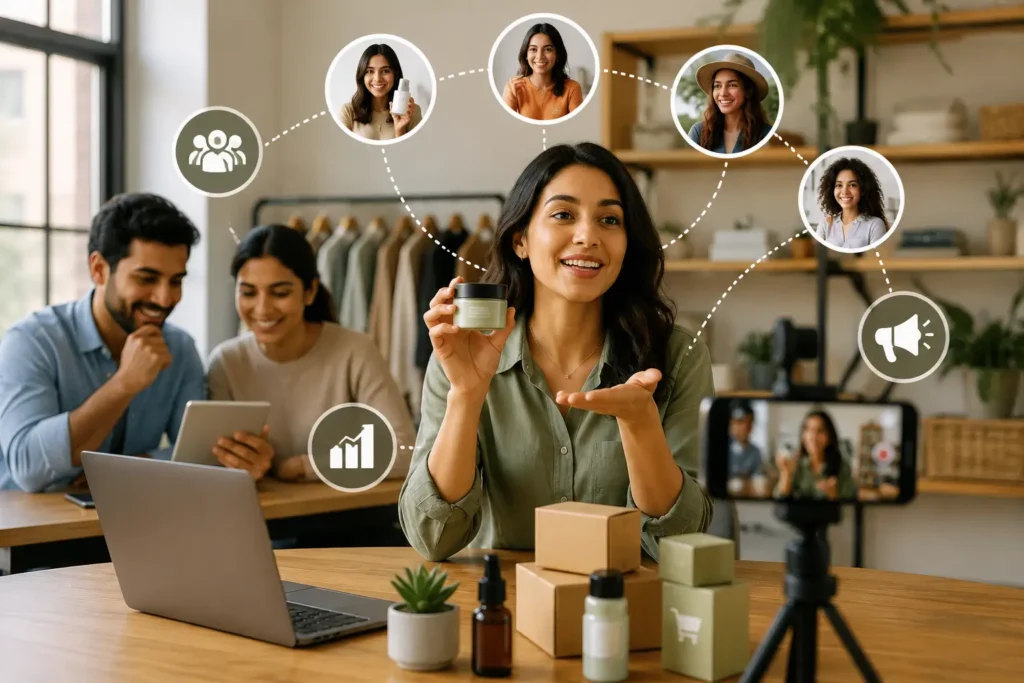
Forget celebrities. For influencer marketing for small businesses, the creators worth your attention sit between 1,000 and 100,000 followers. However, brands looking for larger-scale visibility can also explore strategic Celebrity Endorsement campaigns.
Nano creators at the lower end of that range have built something that larger creators almost never have. A community that actually knows each other. People who comment back and forth, who tag the same friends repeatedly, who treat the creator’s recommendations the way they treat advice from someone in their circle. When a nano creator says something is worth trying, their audience tends to actually try it.
Micro-influencers offer greater reach while keeping that niche focus intact. A micro creator who has built their whole following around sustainable fashion or home cooking or personal finance is talking to a very specific kind of person every single day. If your product belongs in that world, their audience is already yours to reach.
For many small businesses, working with several nano or micro creators can be more cost-effective than putting the entire budget behind one larger creator. Working with multiple creators can also provide more content, reach across different sub-audiences, and more data about what actually resonates. For a small business, this can be a practical way to make the most of a limited marketing budget.
Send the Product First. Pay Later.
This is one of the most affordable marketing moves available and most small businesses never think to do it systematically.
Find creators who are already posting in your category. Not people hunting for paid partnerships. People who genuinely seem to love the space your product lives in. Send them the product. Write a short personal note, not a brief. Tell them you thought they might enjoy it and leave it at that.
Product seeding can also become an affordable marketing strategy for small businesses because brands can test creator interest before committing to paid collaborations.
Some will ignore it. Some will post about it because they actually liked it. The posts that come from genuine surprise are the most convincing content your brand will ever have because no brief in the world produces that reaction. The creator is not performing enthusiastically. They actually have it.
The ones who post unprompted are also telling you something important. Their audience responds to your kind of product. That information is worth as much as the post itself because it tells you exactly which creators are worth a paid partnership down the line.
One Relationship Is Worth More Than Ten One-Off Posts
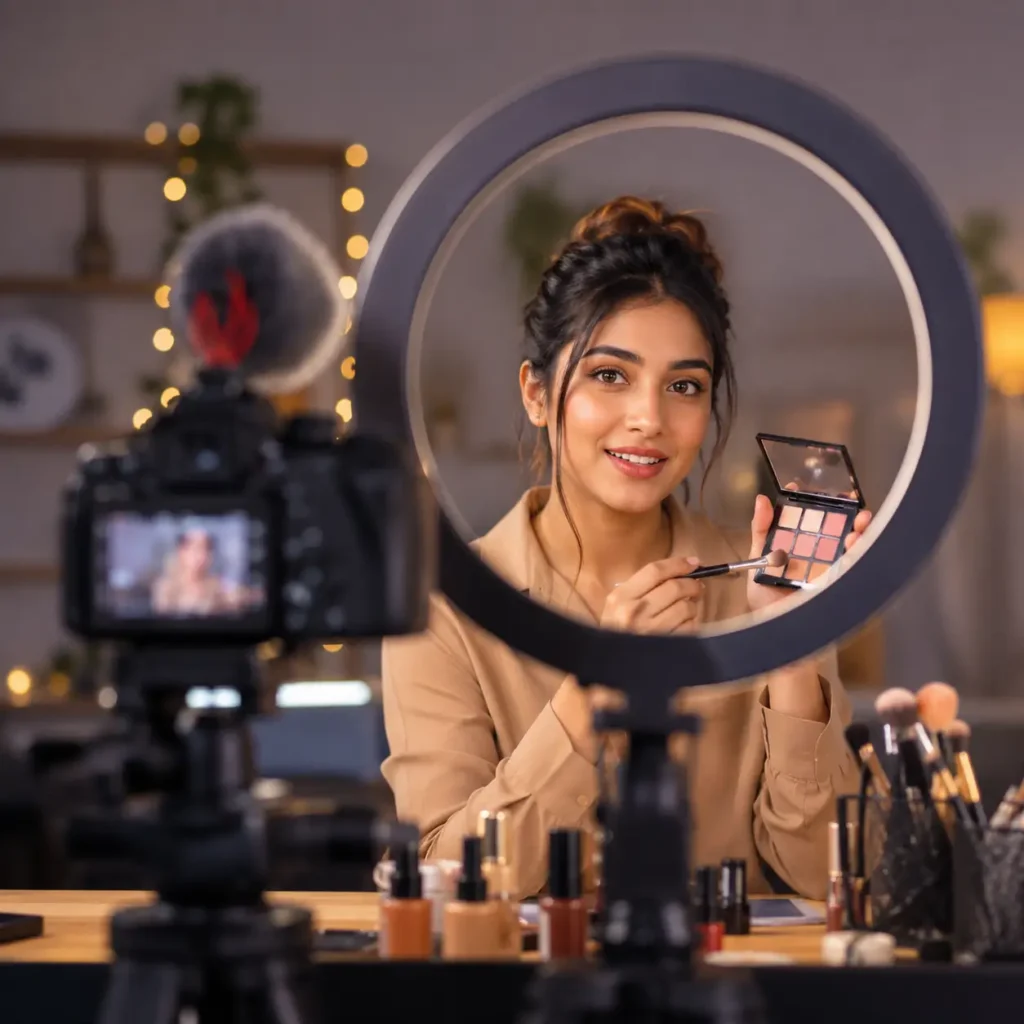
A single creator post introduces your brand to an audience that has never heard of you. That is a starting point, not an outcome.
Most people need repeated exposure to a brand before they feel comfortable buying from it. Especially from a small business they have never encountered before. One post from one creator on one day does not build that comfort. But when someone sees a creator they trust mention the same brand a second time, a third time, it starts to feel like something different. Less like advertising, more like a recommendation they keep hearing from someone whose taste they respect.
Small businesses with limited budgets get much more value from investing in two or three real ongoing creator relationships than from spreading that same budget across ten one-off posts. Consistency is what turns familiarity into purchase.
Building long-term creator relationships can also be supported through professional Talent Management, helping brands develop stronger and more consistent creator partnerships.
Local Businesses Need Local Creators

If your business serves a specific city or area this point matters more than anything else in this guide.
A creator with 400,000 followers spread across India is essentially useless for a restaurant that only serves one neighbourhood. What actually moves the needle is a creator with 15,000 followers in your city whose audience could realistically become your customer. The numbers look smaller. The results are not.
Before approaching any local creator, check where their audience actually is. Most platforms give creators this data and they will share it if you ask. A creator who calls themselves Pune-based but whose followers are mostly from Mumbai is not the right fit for a Pune-focused campaign, regardless of how good their content is.
Stop writing scripts for creators
Small businesses are protective of their brand. That makes complete sense when the brand is homegrown and has just started.
Handing a script to a creator should be the last option when the creator is busy with something else. Sometimes it becomes a task to match the intent when the creator isn’t writing by themself. The timing is slightly off. The enthusiasm feels performed rather than felt.
Share the product. Tell the creator what it does and what makes it different. Tell them what you would love for someone to feel after watching the content. Then step back and let them figure out how to say it in a way that fits their voice and their audience.
Repurpose Every Piece of Creator Content
When a creator posts about your product and it performs well, that piece of content does not have to retire after one day on their channel.
With their permission, use it across your own marketing. Put it on your Instagram. Put it on your product page. Share it on WhatsApp. Run it as a Meta ad. Creator content tends to perform better than brand-produced content in almost every context because the authenticity is visible.
This approach also allows businesses to integrate creator content into a broader Content Marketing strategy and get more value from every piece of content they produce
This makes influencer content particularly useful as an affordable marketing asset because one creator collaboration can support multiple marketing channels.
For a small business working with a limited marketing budget, repurposing creator content can generate more value. The content has already been made. You are just making it work harder.
The One Mistake That Cancels Everything Else
Choosing a creator for their follower count instead of their audience fit.
A creator with 200,000 followers whose community has no real connection to your product will almost always underperform a creator with 12,000 followers whose entire following is built around exactly what you sell. The math on impressions looks better with the first choice. The actual results rarely are.
For influencer marketing for small businesses where every rupee matters, relevance is the whole game. A smaller audience that genuinely wants what you offer will always beat a larger audience that does not.
Research from Sprout Social on influencer marketing consistently shows that brands tracking conversion metrics rather than reach metrics get meaningfully stronger returns from creator campaigns. For small businesses this is not a nice-to-have insight. It is the difference between campaigns that build the business and campaigns that just spend the budget.
Final Thoughts on Influencer Marketing for Small Business
Influencer marketing does not have to require a large budget to deliver results. Small businesses can start with relevant nano and micro creators, focus on genuine relationships, repurpose high-performing content and track conversions instead of vanity metrics. The most effective influencer marketing for small business is built around relevance, consistency and measurable results—not simply follower count.

Manpreet Singh Chadha was a visionary entrepreneur and co-founder of 6th Street Artist, a Mumbai-based influencer marketing agency. With a passion for empowering creators and brands, he played a pivotal role in shaping the agency’s mission to revolutionize influencer marketing in India. His legacy continues to inspire the industry.